BolaWrap 150 – One of the Most Underrated Remote Restraints You’ve Heard of from a Science Fiction Movie
Why There’s a Market Gap for the BolaWrap
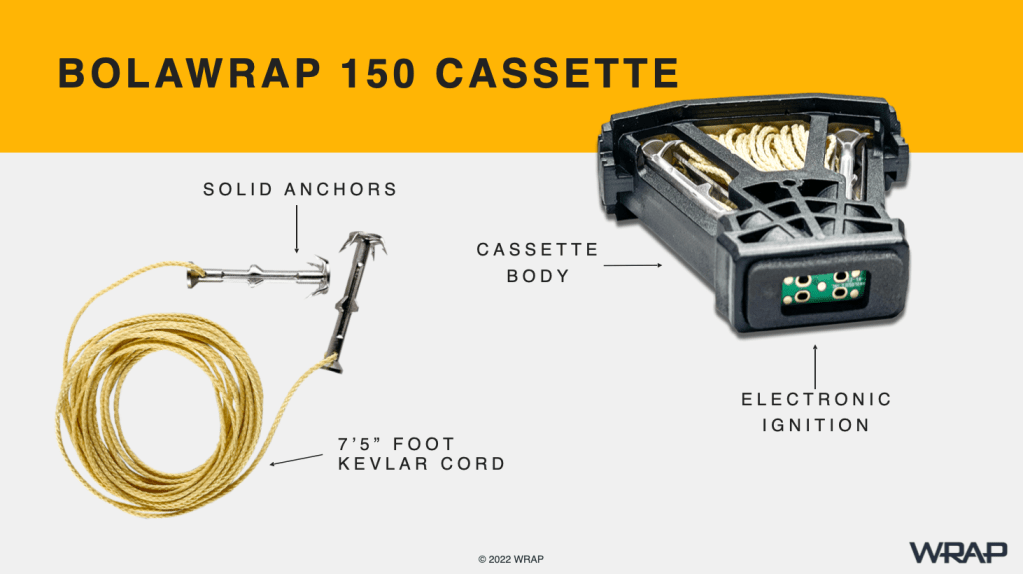
The law enforcement landscape has long been dominated by tools designed to control or neutralize suspects through varying levels of force. From batons to TASERs, these tools have proven their utility, but they also come with significant drawbacks: potential injury, liability, and public perception challenges. The BolaWrap 150 fills a critical gap in the use-of-force continuum, addressing scenarios where traditional tools are either inappropriate or excessive.
Understanding the Use-of-Force Continuum
Law enforcement officers are bound by strict guidelines dictating the appropriate level of force for any given situation. In many cases, unless a suspect is actively resisting or poses an immediate threat, using tools like a TASER may not be legally or ethically justified. However, seasoned officers know that physical confrontation often escalates the moment hands are laid on a suspect. This creates a precarious situation where officers are forced to rely on verbal commands or risk escalating to physical force prematurely.
Enter the BolaWrap
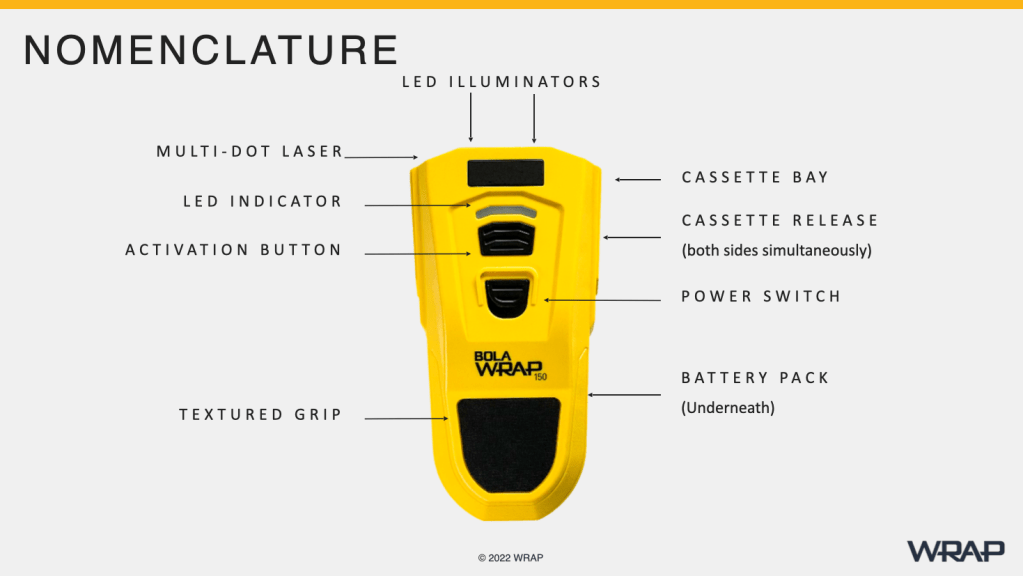
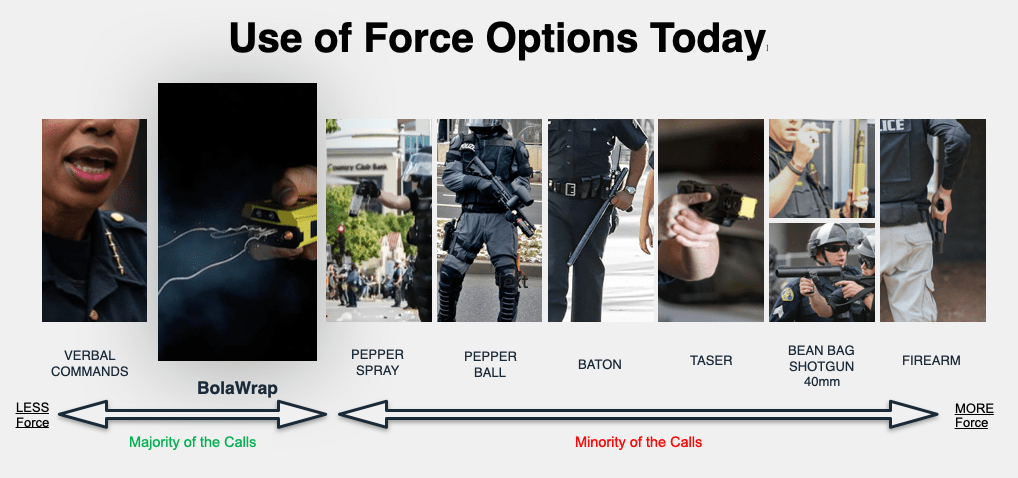
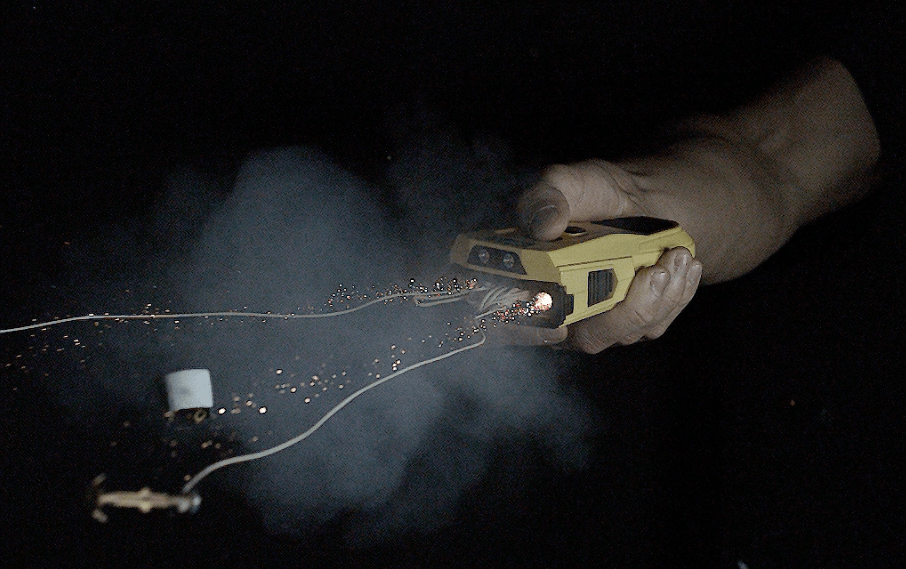
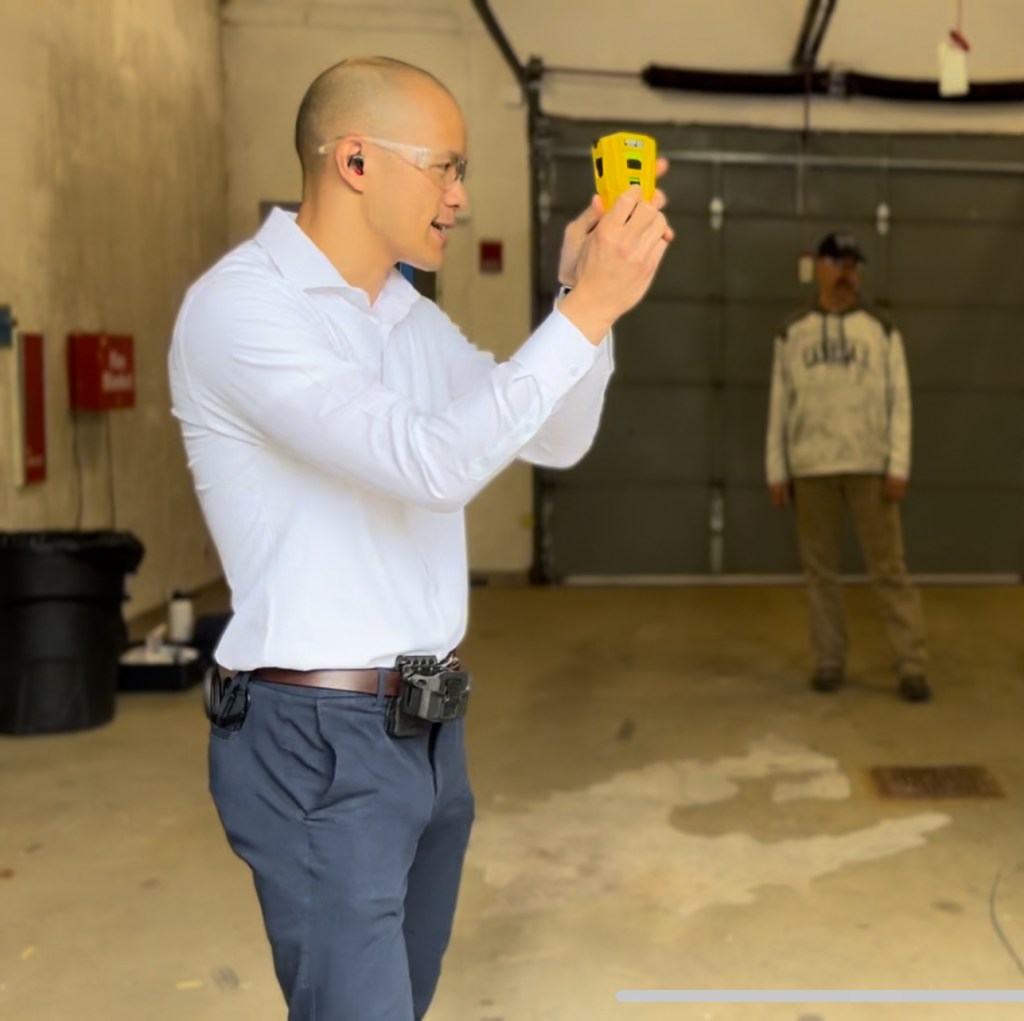
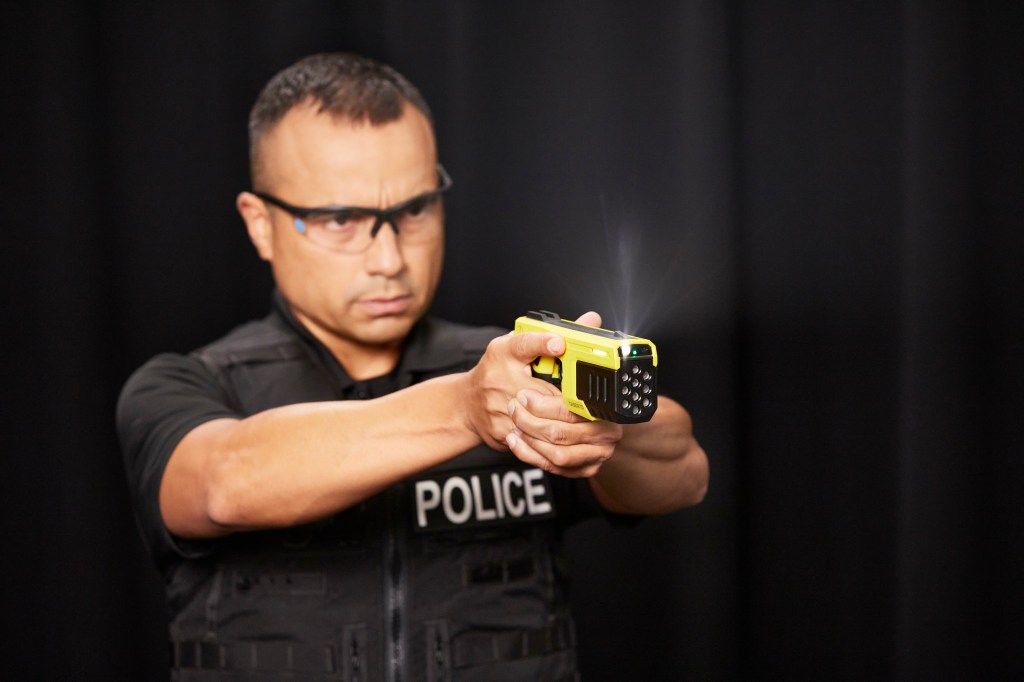
The BolaWrap 150 provides a groundbreaking solution to this conundrum. Designed to restrain without causing pain or injury, the BolaWrap launches a Kevlar cord at the suspect, wrapping around their arms or legs to immobilize them temporarily. The concept may sound like something out of a science fiction movie, but it’s an entirely real and practical tool for modern policing.
Unlike traditional tools, the BolaWrap is preemptive rather than reactive. It allows officers to subdue a non-compliant individual before the situation escalates into a physical struggle, reducing the risk of injury to both the suspect and the officer. It’s a humane option that prioritizes de-escalation while maintaining officer safety.
Why the BolaWrap Matters
- Bridging the Gap: The BolaWrap fills a crucial gap in the use-of-force continuum, offering an option that is less confrontational than physical restraint but more effective than verbal commands.
- Reducing Liability: By minimizing the risk of injury, the BolaWrap can significantly reduce liability for departments and officers.
- Enhancing Public Perception: In an era where law enforcement agencies are under intense scrutiny, tools like the BolaWrap demonstrate a commitment to innovation and non-lethal methods.
Real-World Scenarios
Consider a situation where an officer encounters a mentally ill individual in a public setting. The individual is non-compliant but not overtly violent. Using a TASER would be inappropriate, and physical restraint could escalate the situation unnecessarily. The BolaWrap provides a safe and effective alternative, allowing the officer to immobilize the individual without harm, paving the way for a more controlled resolution.
There are a TONs of real Body Cam footage capturing the successful use of the BolaWrap by Officers on the line of duty across the nation, here are just a few:
A Vision for the Future
The BolaWrap 150 isn’t just another tool in the law enforcement arsenal; it represents a shift toward smarter, safer policing. As more agencies adopt this technology, its potential to transform public safety and officer interactions will become increasingly evident. The BolaWrap is proof that modern policing can embrace innovation without compromising safety or humanity.
Note
I did work for Wrap Technologies for 4.5 years and was the founding engineer joining the company. I was the Ballistic Engineering Manager in charge of developing and testing the BolaWrap. I have personally fired probably the most number of BolaWrap deployments than anyone else in the world, in the thousands of rounds. I can tell you that this thing works. That’s my honest opinion. I’m not paid by them to tell you this; these are my honest opinions.

 Tactics and Gear(s), for those who protect.
Leave a comment