I. Introduction
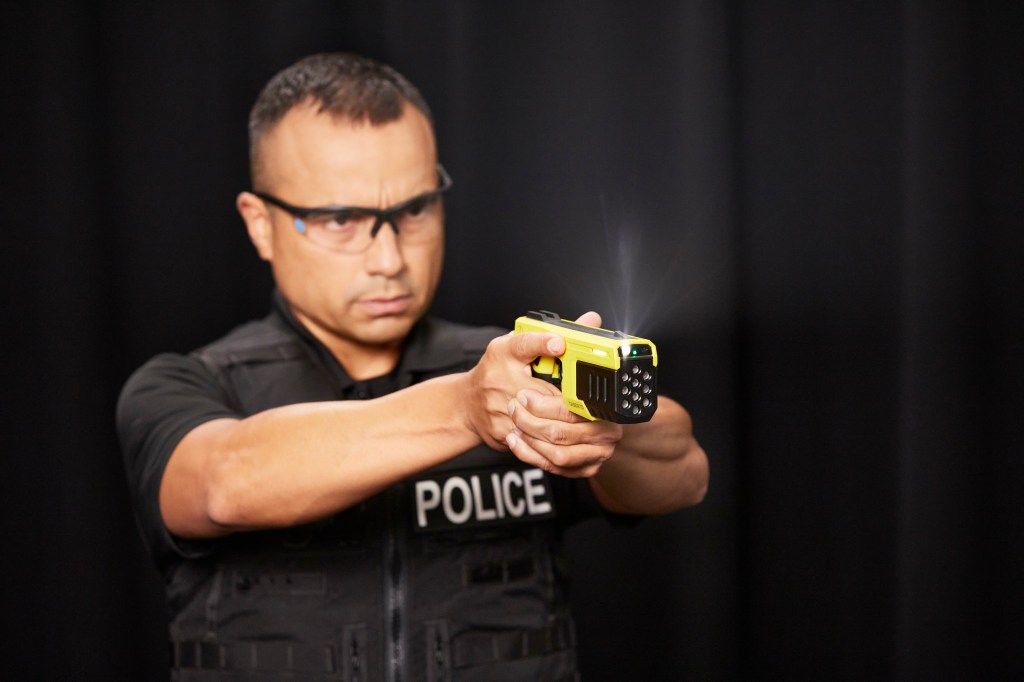
Every year, thousands of lives are saved through the use of less-lethal tools in high-stakes situations. According to the TASER company (now Axon), more than 300,000 lives have been saved from the use of TASER.
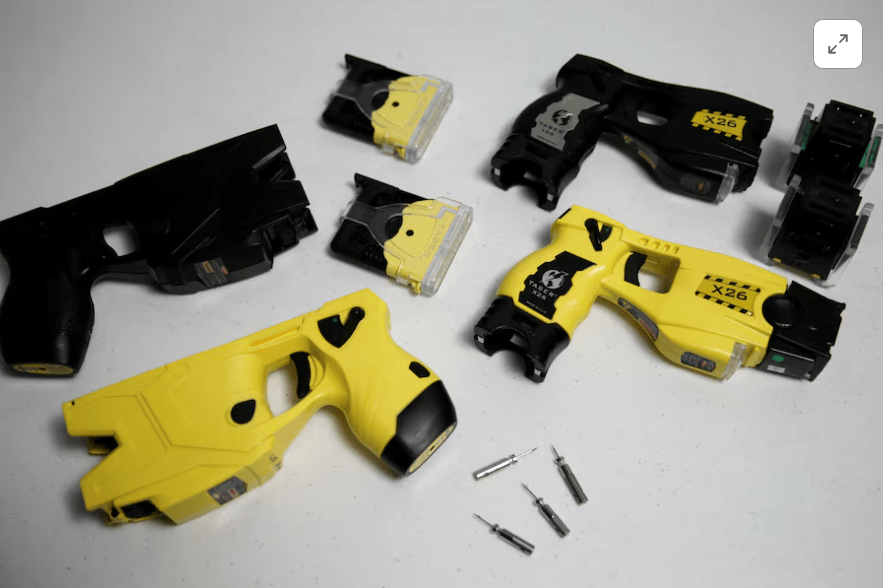
Since its inception in 1974 by NASA researcher Jack Cover, TASER technology has evolved dramatically. Originally inspired by the fictional weapon in Tom Swift and His Electric Rifle, the first TASER devices relied on gunpowder charges, classifying them as firearms. In 1993, Rick and Tom Smith founded Air Taser, Inc. (now Axon), redesigning the device to eliminate gunpowder and making it more accessible. The TASER M26, launched in 1999, was the first model widely adopted by law enforcement, providing a reliable non-lethal alternative to firearms. In 2003, the TASER X26 set the standard for compact, effective tools in law enforcement.
Today, the TASER 10 represents the pinnacle of this evolution, offering a range of up to 45 feet, smart targeting, and a 10-shot capacity. With over 18,000 law enforcement agencies in more than 100 countries utilizing TASER devices, the technology has saved an estimated 300,000 lives while reducing the need for lethal force.
II. How TASER Devices Work
A TASER device’s primary function is to achieve “complete neuromuscular incapacitation.” This occurs when the device delivers an electrical current that temporarily overrides a subject’s nervous system. The current causes involuntary muscle contractions, effectively immobilizing the individual by “locking them up.” This process, known as neuromuscular incapacitation (NMI), ensures that even highly motivated or physically resistant subjects are unable to continue aggressive actions, providing a critical advantage in de-escalation and safety scenarios.
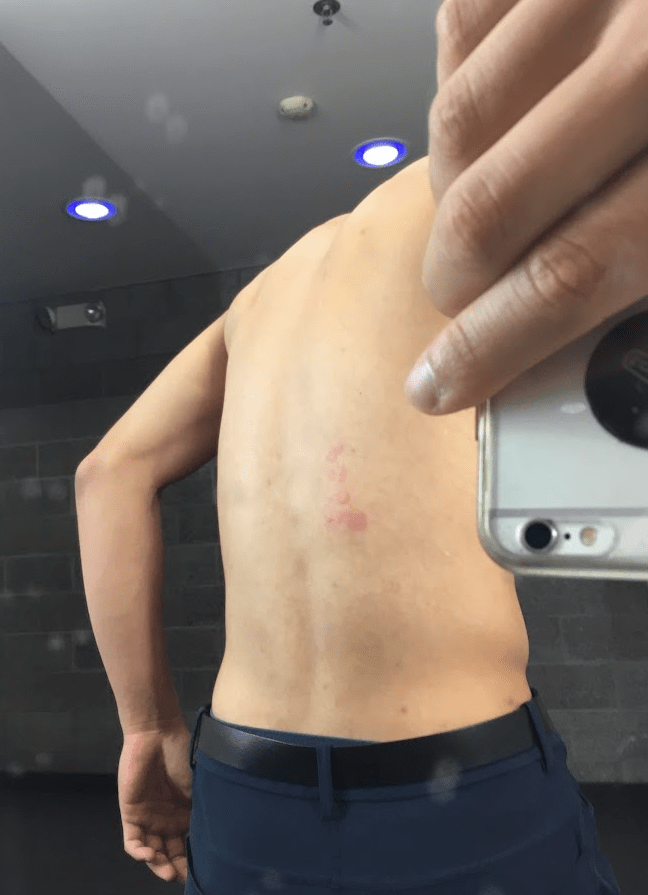
Having the honor to personally experienced being tased myself, I tell you this thing works:
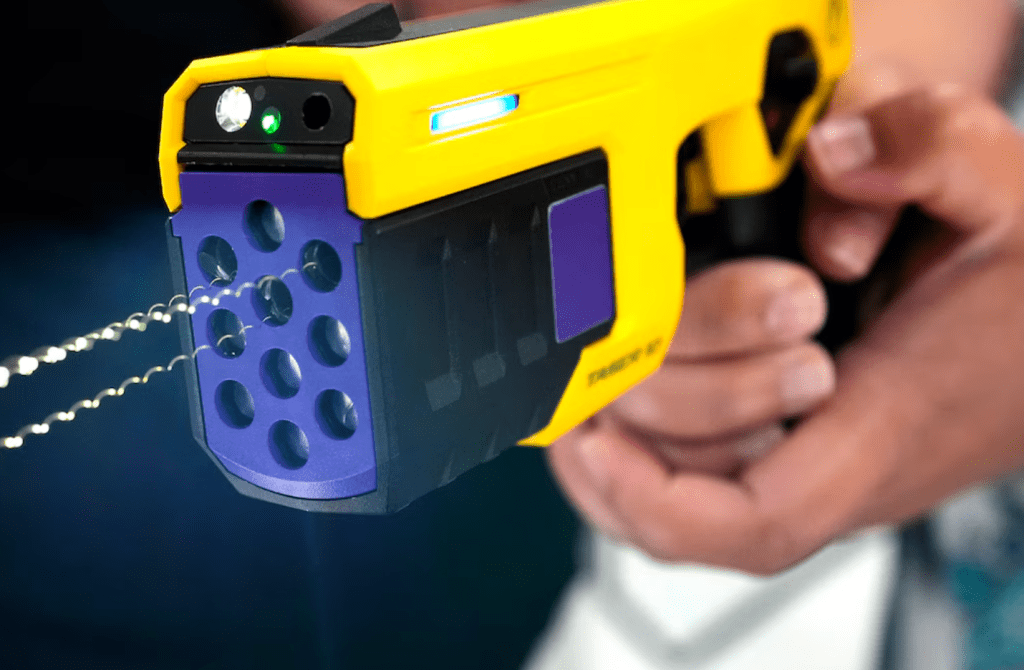
By now most people in the industry are somewhat familiar with the traditional TASER, which deploys two darts to the subject. And in order for that shot to be effective, BOTH darts have to make contact and MAINTAIN contact with the subject. And the recommendation from the TASER training team is to “split the belt” with the darts, meaning one aiming for the lower torso, while the other going for the leg (not the groin … oof). This is often challenging as the situation is dynamic, and the subject is often moving around, resulting in the lower dart missing the leg.
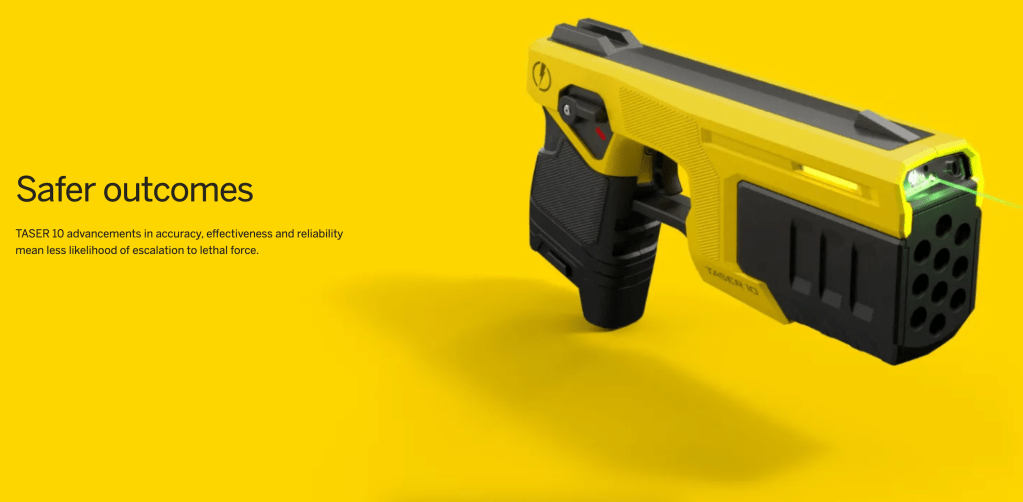
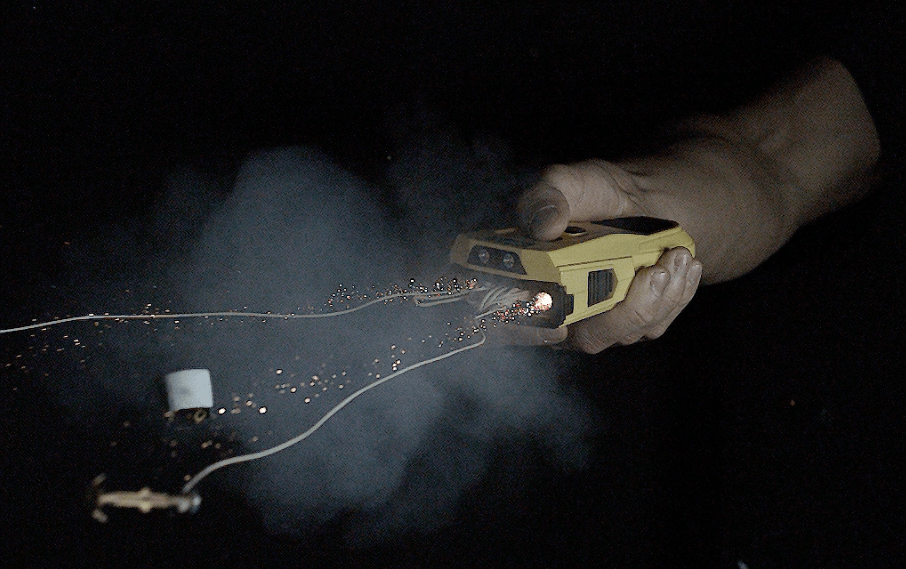
Now the new TASER 10 deploys a single dart at each trigger pull, with the point of impact (POI) much closer to where the point of aim (POA) comparing to its predecessors. This allows for more accurate shots placement at much faster pace, especially since most Law Enforcement Officers (Or LEOs) are trained to aim for center mass, and do a double tap. This immediately puts two darts out as fast as possible, completing the electrical loop necessary for the TASER to be working. This allows the user to accurately place a third dart where they see fit. While I’m not a professionally certified TASER instructor, this is my interpretation of how the tool can be used effectively. Please do comment down below if you have any further insights on this topic!
I had the pleasure to try out the TASER 10 myself, and that was game changing! Just a tad more recoil, but a whole lot more of accuracy!
III. Key Features of the TASER 10
Enhanced Range One of the most notable advancements in the TASER 10 is its extended range of up to 45 feet. This increased distance provides officers with a safer operational buffer, reducing the risk of close-contact confrontations.
Improved Accuracy Equipped with smart targeting capabilities, the Taser 10 dramatically reduces the chances of missed shots. Its advanced targeting system ensures greater precision, even in dynamic or low-visibility situations.
Increased Cartridge Capacity With a 10-shot capacity, the TASER 10 eliminates the need for frequent reloading during critical incidents. This feature ensures continuous operation, offering officers more confidence and efficiency under pressure.
De-escalation Capabilities By enabling non-lethal options at a greater range with enhanced accuracy, the TASER 10 fosters safer interactions and reduces the likelihood of lethal force.
Civilian Applications Though currently unavailable to civilians, the TASER 10’s advancements demonstrate the potential for improved personal defense tools. Models like the TASER Pulse and TASER Bolt 2 offer civilians effective, user-friendly alternatives.
IV. Real-World Applications and Scenarios
Law Enforcement The TASER 10 significantly enhances officer safety and effectiveness in diverse scenarios. From crowd control to high-risk arrests, its extended range and increased capacity provide critical advantages. For example, officers in crowd management situations can neutralize threats without escalating to lethal force.
Civilian Use While civilians cannot yet purchase the TASER 10, its design principles influence tools like the TASER Pulse. These devices offer accessible, efficient self-defense options for non-law enforcement users.
Comparison to Other Tools Compared to other less-lethal tools such as pepper spray or batons, the TASER 10 provides unmatched range, accuracy, and ease of use. Its 10-shot capacity further distinguishes it from earlier models and alternative tools.
V. Benefits for Law Enforcement and Public Safety
Officer Safety By allowing officers to maintain distance from potential threats, the TASER 10 minimizes risks associated with close-proximity confrontations. Its precision and capacity further enhance operational safety.
Community Trust The use of less-lethal tools like the TASER 10 supports improved public perception of law enforcement, demonstrating a commitment to minimizing harm while maintaining safety.
Cost-Effectiveness Though the initial investment in TASER 10 units may be higher, their durability and advanced features make them a cost-effective solution for agencies over time.
VI. Potential Concerns and Limitations
Training Requirements Proper training is essential to maximize the effectiveness of the TASER 10. Users must become proficient in its operation to ensure optimal performance in critical situations.
Legal and Policy Considerations As with all less-lethal tools, the TASER 10’s use is subject to legal and regulatory oversight. Agencies and individuals must navigate varying laws governing deployment and ownership.
Cost for Individuals and Agencies The advanced technology embedded in the TASER 10 comes with a higher price point, which may be a barrier for smaller agencies or individual users.
VII. Conclusion
The TASER 10 represents a significant step forward in less-lethal technology, offering enhanced range, accuracy, and capacity that redefine safety and efficiency for law enforcement and beyond. Whether reducing risks for officers or fostering community trust, this device underscores the importance of innovation in public safety. For those interested in the future of non-lethal tools, the TASER 10 serves as both an inspiration and a benchmark. As Axon continues to push boundaries, the future of less-lethal technology promises even greater advancements.

 Tactics and Gear(s), for those who protect.
Leave a comment